Log 001 — Oct 24, 2026
The Studio, on its own hardware
Studio v1.3 is the first release made on the real Studio, with a sampler, a recorder and headphones.
The Studio’s parts arrived this morning. By tonight it’s running on its own hardware: a Raspberry Pi 3 B+, a 3.5” touchscreen and a PiSugar 3 Plus, with two FM-1s, an M-VAVE SMK-37 running Clipper and a K.O. Sidekick plugged into its four USB ports. Studio v1.3 is what came out of that day.
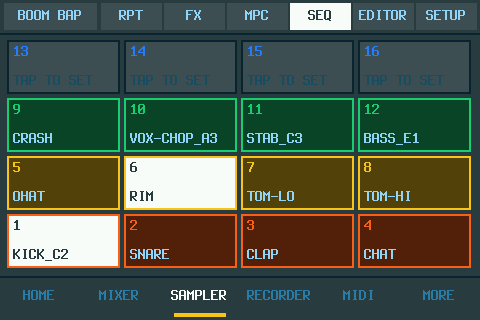
A sampler with SLOOP’s sequencer
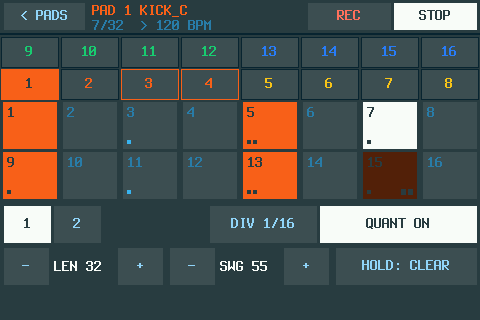
The new SAMPLER tab has 16 pads in kits. Sample any source onto a pad, trim it in the touch sample editor and play it from the screen or any MIDI keyboard. SLOOP’s own drum sequencer runs the pads, so the Studio can make a beat with nothing else plugged in: up to 64 steps, swing, ratchets, nudge and live recording. There’s also note repeat, and 16 of SLOOP’s punch-in FX: loops, stutter, reverse, tape stop, filters, crush and echo.
Headphones and a recorder
The Pi’s 3.5 mm jack is now a second output with no Bluetooth delay. Each source in the MIXER has a CUE button, heard on the jack before its fader, with a cue/main blend, as on a DJ mixer. The RECORDER has a tab of its own, with the reel-to-reel deck.
Made on the real thing
The real hardware found what a computer couldn’t. The screen driver changed in the current Raspberry Pi OS, and it now runs at 24 MHz. Touch has a calibration screen. An SMK-37 running Clipper looked like a third FM-1. A keyboard’s synth took over the audio clock and everything crackled: now an FM-1 always keeps the clock. Every USB MIDI device has its own row and column in the MIDI routes, the meters are smoother, and there’s a proper boot screen.
Pocket v2.8.3 gets the shared fixes. The code is on GitHub. Here’s the tour: the Studio’s own screens, and a piece played on the two FM-1s and the SMK-37, recorded by the Studio itself.